Introduction
I was raised to bow before a God I did not recognize.
As a boy, I was told stories meant to tame me—tales of a jealous deity who ruled with thunder, demanded obedience, punished endlessly, and forgave selectively. A god carved in the likeness of frightened men. A god who looked more like a tribal chieftain than the Architect of existence.
But even then, something ancient inside me stirred with suspicion.
I felt the first flicker of rebellion—not against God, but against the smallness of the god I was being shown.
In every sermon, every classroom, every ritual, I heard a God who sounded like He feared His own creation. Who needed constant reassurance. Who demanded loyalty or else destruction.
And I thought, even as a child:
A God worth worshiping should not be so insecure.
I did not yet have the words for my discontent.
Only the quiet certainty that the truth was larger than the story.
The older I grew, the louder that certainty became.
People told me Jesus “died for my sins.” But I could never understand how the suffering of one man—divine or not—could erase the wrongdoing of an entire species. How three days in a tomb could be counted as eternal sacrifice. How justice could be purchased with blood like a transaction at a marketplace.
Even before I had the courage to question it, my soul already did.
Yet despite all this, I was never able to walk away from Jesus.
There was something in His words, His actions, His presence in the stories—something raw, something noble, something true.
Not the domesticated Christ of church paintings, but the fire beneath Him.
The man who stared down tyrants.
The teacher who challenged empire.
The sage who spoke of a kingdom within.
What repelled me was not Christ.
What repelled me was the cage they built around Him.
And so my search began. Not for a religion, not for doctrine, but for the real Christ—the one too vast to be held by any institution, too luminous to be contained by any council.
Along the way, I learned how the early Church sharpened and chained the story of Jesus in smoke-filled rooms under Roman authority—deciding which books would survive, which teachings would be declared heresy, and which understandings would be buried under threat of death. Councils rose, doctrines hardened, and Christ became the property of empire.
But truth does not belong to empire.
Truth belongs to the soul.
When I opened the Gnostic texts for the first time, it felt like a door blown off its hinges. Here was Jesus speaking of light within the human heart, of the kingdom already inside us, of awakening rather than submission. Here was a Christ who did not demand belief but invited transformation.
It was as if I was encountering Him for the first time.
And then the path twisted again.
I discovered Messianic Judaism—Jews who believe Jesus (Yeshua) is the Messiah while remaining deeply Jewish. Suddenly I saw a picture of Christ far older and more grounded than anything I had been taught. Jesus wasn’t stepping outside Judaism—He was standing at its center, revealing its mystical heart.
Through Jewish mysticism, I encountered Ein Sof—the infinite Source.
Through Gnostic writings, I met the Monad—the same infinite Source under another name.
Through my own reflection, I realized I had always believed in this deeper God, long before I knew the words.
The more I searched, the clearer it became:
Christ never belonged to the Church.
He belongs to the ancient current of Divine Wisdom running beneath millennia of human hands.
This is not rebellion.
This is remembrance.
And so I stand here now, not as a man who has found all the answers, but as one who has finally learned how to ask the right questions. This manuscript is not a proclamation of truth—it is a warrior’s journal of seeking. A record of scars, revelations, and the quiet voice within me that refused to be silenced.
This is my journey away from the Christ I was given
and toward the Christ who has always been calling.
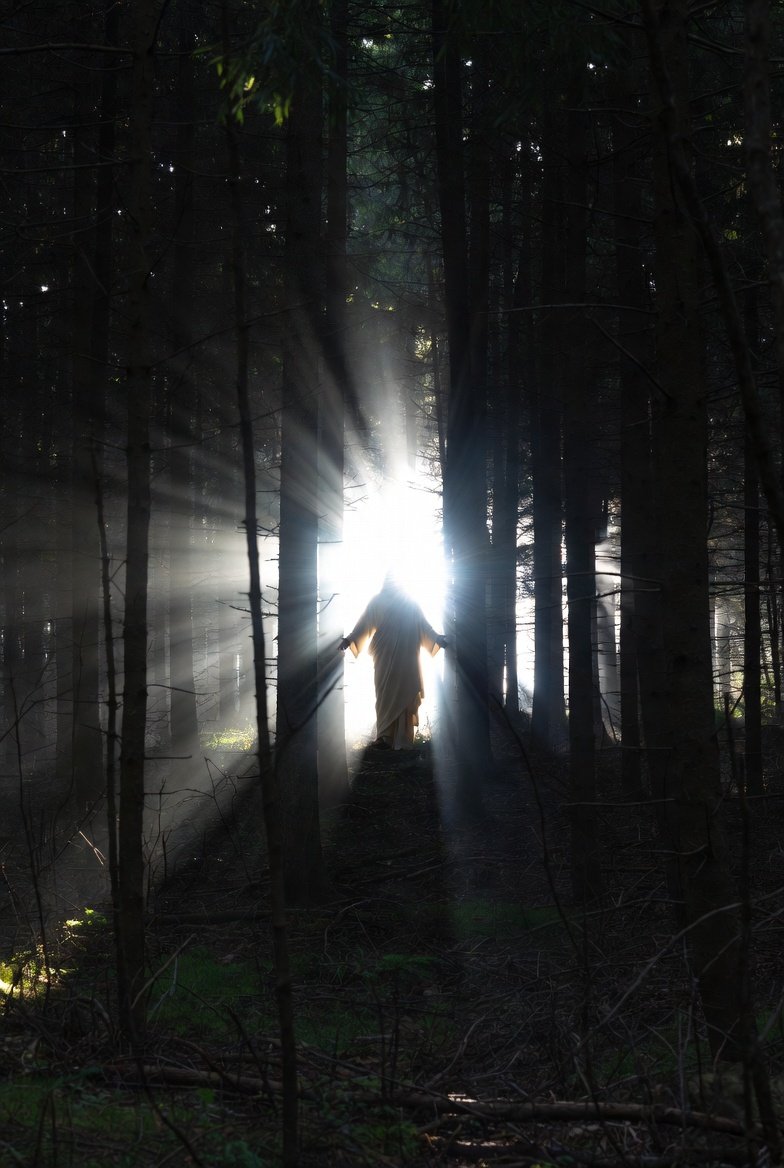
1. The Historical Jesus and the World He Lived In
If I wanted to find the real Christ, I had to walk into His world — not the one shaped by priests, empires, and polished stained glass, but the raw earth beneath His sandals. The dust of Judea. The fire of prophets. The tension of Rome breathing down the neck of a restless people.
The first truth that hit me like a blade to the chest was simple:
Jesus was not a Christian.
Jesus never intended to create Christianity.
He was a Jew — through and through.
Not the neat, well-behaved version many imagine today.
But a Jew born into a world of turmoil, mysticism, political revolt, and spiritual hunger.
To understand Him, I had to understand that world.
A World Divided and Waiting for Fire
The Judaism of Jesus’ time wasn’t a peaceful field of sheep. It was a battleground of ideas and factions:
- Pharisees guarding tradition like a fortress
- Sadducees clinging to political power under Rome
- Essenes in the desert sharpening their souls for the end of the age
- Zealots sharpening steel for rebellion
- Prophets crying out in wilderness valleys
- Mystics climbing ladders of light in their visions
Jesus didn’t stand above this world — He lived inside it.
He was shaped by it.
He breathed its air.
His words were forged in its furnace.
Once I saw this, His teachings stopped sounding like church slogans and started sounding like battle cries, reminders, and riddles carrying the weight of ancient Jewish mysticism.
Jesus Was Trained by Mystics, Not Bureaucrats
Long before Christianity wrapped Him in robes, God had already carved a mystical lineage through Israel:
- the hidden Infinite, Ein Sof
- divine emanations flowing into creation
- heavenly ascents through angelic realms
- Wisdom (Chokhmah), the feminine presence of God
- the Memra — the “Word” that creates, heals, destroys, and reveals
When I later read the Gnostic texts speaking of:
- the Monad beyond all worlds
- emanations of divine light
- Sophia descending and rising
- the spark within the human heart
…I realized I wasn’t reading something foreign to Jesus.
I was reading the spiritual language He already spoke.
Jesus wasn’t the founder of something new.
He was the culmination of something ancient.
The First Followers — Warriors of the Inner Path
And here’s the truth that blew apart everything I had been taught:
The first people who followed Jesus weren’t Christians — they were Messianic Jews.
They kept the Sabbath.
They followed Torah.
They prayed in Hebrew.
They walked the Temple courts.
They honored their ancestors.
They believed Yeshua was the Messiah of Israel — not the architect of a new Roman religion.
James, the brother of Jesus, led them. Not as a bishop of empire, but as a Jewish mystic in the line of the prophets — a man of prayer, discipline, and devotion.
Rome didn’t understand any of this.
So Rome destroyed it.
Because men in power fear people who can’t be controlled.
The Real Jesus Was a Threat — Not a Mascot
When you strip away the marble statues, the stained-glass halos, the layers of doctrine written by men who never met Him, the Jesus that remains is:
- a healer with the hands of a sage
- a mystic who saw reality as layered and luminous
- a prophet who challenged both empire and priest
- a reformer who exposed corruption
- a teacher who understood the human soul
- a visionary who taught the Kingdom within
Not a figurehead.
Not a mascot for empires.
But a fire meant to wake people up.
It’s no wonder the Demiurge-driven institutions later tried to cage Him.
A Christ who awakens people is dangerous.
A Christ who empowers them is uncontrollable.
And institutions exist to control.
The Canon Was Not Revealed — It Was Constructed
Rome didn’t convene councils to discover truth.
Rome convened councils to enforce unity.
They voted on divinity.
They argued over metaphysics.
They banished those who disagreed.
They declared their opponents heretics.
They burned what contradicted them.
And once the smoke cleared, the Christ they approved was a Christ safe for empire.
Not the Christ of the mystics.
Not the Christ of the prophets.
Not the Christ of the early Jewish believers.
Not the Christ who spoke of light, awakening, and the divine fire inside every soul.
That Christ was too wild.
So they replaced Him.
The Turning Point in My Journey
When I understood that Jesus lived and taught within a world of Jewish mysticism…
When I saw that the earliest believers were Messianic Jews, not Christians…
When I learned that Gnostic and Jewish mystical traditions reflected the same hidden structure of reality…
…I realized I could no longer search for Jesus inside the walls that Rome built.
To find the real Christ, I had to go back:
Back to Israel.
Back to the prophets.
Back to the mystics.
Back to the divine fire running beneath Scripture like a buried river.
Back to the Christ before empire touched His name.
This was the moment my search stopped being academic
and became a crusade for truth.
2. Jesus as Revealer of the True God
When I began stripping away the doctrines I inherited, the first truth I stumbled into wasn’t gentle. It wasn’t comforting. It hit like a war hammer striking stone:
The God Jesus reveals is not the god I was raised with.
Not even close.
I had grown up under the shadow of a deity who demanded obedience through fear — a cosmic judge, easily angered, quick to punish, eternally disappointed. And for years I tried to force myself to love that god… but the love never came. Instinctively, my soul recoiled.
It wasn’t until I walked beside Christ Himself — not the church’s version of Him — that I finally understood why.
Jesus did not come to reinforce humanity’s broken idea of God.
He came to expose it.
He came to burn down the false image and reveal the Source behind all things.
The Grounded Truth
If you look honestly at the texts, without fear, without inherited assumptions, without kneeling to the interpretations of men who lived centuries after Jesus, you see it immediately:
The God Jesus describes does not behave like the God of certain ancient Scriptures.
Where the old texts show a deity who is wrathful, tribal, jealous, and violent…
Jesus speaks of a Father who is unseen, universal, compassionate, and overflowing with mercy.
Where the old stories thunder with punishment…
Jesus offers forgiveness, healing, and restoration.
Where the old commands demand sacrifice…
Jesus says God desires mercy, not ritual.
And where the ancient worldview draws lines between “us” and “them”…
Jesus tears the lines apart.
You can deny this, or you can face it like a warrior:
Jesus is revealing Someone else. Someone higher. Someone the world forgot.
My Awakening
This truth did not arrive like a doctrine.
It arrived like recognition.
When I sat with Jesus’ words — truly listened — something in me stirred like an ancient memory waking up. It felt less like learning and more like remembering.
It was as if Jesus whispered through the pages:
“You have always sensed the True Father.
You were right to reject the false one.
Let Me show you who He really is.”
And suddenly the contradictions in Scripture made sense.
Suddenly the tension between Old and New was not a crisis — it was evidence.
Evidence of layers. Evidence of competing voices.
Evidence that humanity has been wrestling with its understanding of the divine from the beginning.
Jesus did not enter the world to validate every ancient belief about God.
He entered it to correct them.
And in doing so, He corrected my own.
The Mystical Depth (The Truth Beneath the Truth)
This is where the ground beneath my feet split open.
When I encountered the Gnostic writings — the Apocryphon of John especially — it was like staring into the missing chapter of humanity’s spiritual memory. Suddenly Jesus’ teachings were no longer fragments. They were part of a larger cosmic pattern.
The Apocryphon speaks of the Monad — the Infinite, the Invisible Spirit — a God beyond form, beyond emotion, beyond limitation. The Source of all light. The Parent of truth.
A God nothing like the insecure deity shouting in some ancient passages.
A God everything like the One Jesus reveals.
Christ wasn’t speaking in riddles.
He was speaking the language of the Source — the language of origin.
And then comes the piece that shook me:
The world, according to the Gnostic view, is shaped by a lesser being — the Demiurge — a craftsman who mistakes himself for the highest God, enforcing a flawed order upon creation.
This doesn’t contradict Jesus.
It explains Him.
It explains why He speaks of light entering darkness.
It explains why He battles oppressive systems.
It explains why He confronts the religious elite.
It explains why He tells us the Kingdom is within — buried beneath the fog of illusion.
Jesus isn’t just a teacher.
He is a revealer — a messenger from the True Source piercing the veil of a corrupted world.
He comes to awaken the divine spark in each soul — the fragment of the Monad trapped in matter — and guide it home.
THE ESSENCE
Jesus is not merely interpreting God.
He is unveiling God.
Not the god of thunder and fear.
Not the god of tribe and territory.
Not the god of punishment and demand.
Not the god weaponized by priests or empires.
But the God your soul has always known:
The Source. The Infinite. The Father of Lights.
The One Jesus calls “Our Father.”
This is the Christ I follow — the Christ who tears down idols, shatters illusions, and reveals the hidden truth beneath all things.
This is the Christ who woke me up.
3. The Cross as Revelation, Not Transaction
For most of my life, the Cross was a riddle I refused to solve by lying to myself. I was told Jesus “paid the price” for my sins. That the Father demanded blood. That divine justice required torture. That a perfect man had to be murdered so God could tolerate my existence.
But my soul knew better.
A warrior knows the difference between justice and cruelty.
A seeker knows the difference between wisdom and fear.
And the God I met through Christ was nothing like the deity described in this transactional myth.
So I followed the scent of truth — through Scripture, history, mysticism — and found what the church had buried:
Jesus didn’t die to pacify God.
He died to expose the powers that pretend to rule this world.
The Cross was never a payment.
It was a revelation.
The Atonement Theory Was Forged by Men, Not Christ
Not once — not a single time — did Jesus say:
“I must die because the Father demands it.”
What He did say:
- “If they persecuted Me, they will persecute you.”
- “Forgive them, for they know not what they do.”
- “This is your hour — and the power of darkness.”
Darkness.
Not the Father.
Not heaven.
Not some cosmic ledger in need of balancing.
The idea that the Cross is a payment comes centuries later — a mix of legal metaphors, Roman punishment culture, and fear-based theology.
The earliest Jewish followers of Jesus didn’t teach it.
The Eastern Church never taught it.
Jesus Himself never even hints at it.
Because it was never true.
The Cross Unmasks This World, Not God
When the light enters a world built on illusion, what do you think happens?
The illusion fights back.
The Cross is not God demanding death —
it is the world revealing its inability to tolerate truth.
It is humanity — blinded by ego, fear, and the influence of the Demiurge — striking at the divine presence in its midst.
It is the false god of this world throwing everything he has at the emissary of the True God…
and losing.
The Cross isn’t a sacrifice.
It’s a showdown.
It is the moment the mask falls off the powers of this world, and their violence is exposed as impotence.
Why the “Sacrifice” Narrative Collapses Under Its Own Weight
Let’s be brutally honest:
You can’t call it a sacrifice
if the one “dying” knows He will rise in two days.
A sacrifice is loss.
Jesus didn’t lose — He conquered.
A sacrifice appeases an angry deity.
Jesus revealed a loving one.
A sacrifice pays a debt.
Jesus shattered the illusion that we ever owed one.
If the Father needed blood to forgive,
then He is no better than the false gods of old — petty, insecure, and bound by cosmic bookkeeping.
But that is not the Father Jesus reveals.
The Cross doesn’t change God.
It exposes who God never was.
What the Cross Actually Reveals
Jesus didn’t die to erase sin.
He died to unmask it.
He didn’t die because the Father required suffering.
He died because humanity, under the influence of the Demiurge, rejects the light it cannot comprehend.
He didn’t die to fix heaven.
He died to heal our vision.
He didn’t die to save us from God.
He died to save us from the lies we believed about God.
The Cross is the moment truth stands before the world,
and the world chooses violence —
and truth refuses to retaliate.
This is not weakness.
This is victory.
A warrior-spirit victory.
A divine victory.
A cosmic victory.
The Resurrection — The Final Insult to the Powers of Darkness
When Jesus rises, He’s not saying,
“Payment accepted.”
He’s saying:
“You tried to destroy the light —
and the light cannot be destroyed.”
He’s saying:
“Death is not your master.
The Demiurge is not your lord.
The world’s system has no claim on your soul.”
He’s saying:
“Your true home is with the Source —
and nothing in this realm can stop you.”
The Resurrection is the demonstration of the destiny of every awakened soul:
You are not of this world.
And this world cannot own you.
Why This Changes Everything
When I finally let go of the fear-driven story and embraced the revelation-driven one, my faith didn’t shrink — it expanded.
I stopped seeing Jesus as a sacrificial lamb
and started seeing Him as a divine insurgent.
I stopped seeing the Father as a wrathful judge
and started seeing Him as the Eternal Source calling us home.
I stopped seeing myself as guilty, fallen, broken
and started seeing myself as a spark of the Infinite, trapped but not lost.
Jesus didn’t come to rescue us from God.
He came to rescue us from the lies that hide God.
To follow Christ is not to kneel before guilt.
It is to rise into the truth of who we were always meant to be.
The Cross is not the defeat of Christ.
It is the defeat of the darkness He came to expose.
And the Resurrection is the evidence that the True God still reigns,
far above the counterfeit throne of this broken realm.
4. The Divine Identity of Christ in Messianic Judaism & Gnostic Christianity
There came a point in my search when the question “Who is Jesus?” stopped being a theological puzzle and became a confrontation. A mirror. A challenge thrown at my very soul. I realized I could no longer accept the answers handed down by institutions that barely resemble the world Jesus actually walked in.
If I wanted the truth, I had to walk the old roads myself — the Jewish roads, the mystical roads, the forbidden roads.
And what I found was not the Christ of catechism class.
I found the Christ who strides across history like a living flame.
The Christ who doesn’t bow to empire or institution.
The Christ who belongs to no denomination because He belongs to the Source itself.
Messianic Judaism — The Messiah Rooted in His Own Soil
For the first time in my life, I saw Jesus not as the founder of some later religion, but as a son of Israel, steeped in the ancient mystical tradition of His people.
Messianic Judaism hit me like a hammer:
Jesus is not breaking Judaism.
He is fulfilling its deepest current.
He reveals:
- the Father behind all things
- the Wisdom (Chokhmah) that formed the world
- the Shekhinah — the Presence — alive in Him
- the long-awaited Messiah who heals, restores, awakens
- the living Torah, breathing and walking
This wasn’t doctrine.
This was recognition.
Yeshua didn’t overthrow Israel’s story.
He completed it.
Messianic Judaism showed me the divine lineage Jesus stands in — not as a Greek-style demigod, but as the human manifestation of the eternal Presence that Israel had been wrestling with since the beginning.
This alone would be enough to call Him divine.
But then came the deeper layer.
The one the Church feared.
The one they buried.
Gnostic Christianity — Christ as the Emanation of the Monad
When I opened the Gnostic texts, I wasn’t expecting clarity.
I wasn’t expecting confirmation.
I wasn’t expecting recognition.
But that’s exactly what I found.
Christ appears not as a prophet alone,
nor as a Messiah alone,
but as the luminous emanation of the Infinite —
the Monad
the Invisible Spirit
the Source beyond all worlds.
In this telling:
- Christ is not created by the Demiurge
- Christ is not bound by the laws of matter
- Christ descends from the True God
- Christ enters the human condition voluntarily
- Christ awakens the divine spark within humanity
- Christ exposes the false god who claims to rule this realm
And suddenly His words made perfect sense:
“I and the Father are one.”
“Before Abraham was, I AM.”
“The Father is greater than I.”
“I came from the Father.”
“I return to the Father.”
These aren’t contradictions.
They’re echoes of emanation.
Christ is the extension of the Source into the world of shadows,
the ray of light piercing the fog,
the original truth entering the counterfeit realm.
No wonder the Demiurge could not comprehend Him.
No wonder the rulers of the age trembled.
No wonder the world reacted with violence —
darkness always lunges at the light it cannot extinguish.
Reconciling Both — The Christ Who Finally Makes Sense
What Messianic Judaism grounded,
Gnostic Christianity illuminated.
The two together formed the image I had been searching for my entire life:
Christ as the divine emissary of the True God,
born into the lineage of Israel,
carrying the flame of the Source into a world of illusions.
He is:
- the Jewish Messiah
- the incarnation of divine Wisdom
- the emanation of the Monad
- the one untouched by the Demiurge’s authority
- the awakener of the imprisoned divine spark
- the bridge between humanity and the Source
- the living revelation of the Father
- the only one who could walk into this world and remain uncorrupted
Christ isn’t divine because a council voted on it.
He isn’t divine because creeds demanded it.
He isn’t divine because tradition insists on it.
Christ is divine
because He is the radiant extension of the Infinite into the finite.
Because He is the truth of God in human form.
Because He reveals the God we always suspected existed but were never shown.
This is the Christ that awakened me.
This is the Christ the institutions tried to tame.
This is the Christ who refuses to be reduced to dogma or ritual.
This is the Christ who calls warriors and seekers — not spectators.
This is the Christ who speaks to the fire inside me.
This is the Christ who feels like home.
5. The Cosmic Human: Divine Origin, Forced Forgetting, and the Prison of the Material World
There comes a point in a man’s life when he stops asking small questions. When the surface-level explanations that satisfied him as a child no longer hold up under the weight of lived experience. For me, that moment came when I realized that nothing in this world behaves the way a creation of a perfect God should behave.
Beauty and suffering grow side by side like weeds and roses in the same soil. Human beings carry wisdom in one breath and madness in the next. We can touch the divine in meditation… and then plunge into self-destruction an hour later.
If humanity was shaped by a perfect Creator, why do we feel like fractured beings trying to remember what we once were?
Something didn’t add up. And once I stopped running from the question, the truth began to surface.
The Human Divide — Proof That Something Interfered With Us
Inside me, there are two forces:
One is a spark of something eternal — a quiet knowing, a pull toward compassion, a desire to grow beyond myself.
The other is a heaviness — fear, ego, instinct, forgetfulness… a weight that feels imposed rather than natural.
The Church called this “sin nature.” But that answer was too simple and too convenient.
No—this wasn’t moral failure. This was a fracture.
When I encountered the Gnostic claim that humanity carries a fragment of the divine trapped inside a body built by a lesser being, everything clicked.
It explained the tension. It explained the duality. It explained why we’re capable of breathtaking love one moment and savage destruction the next.
We are not broken by accident. We are divided by design.
The Apocryphon of John — The First Story That Didn’t Lie to Me
When I read the Apocryphon of John, I felt something I had never felt from church doctrine: recognition.
It describes a universe that finally matches human experience:
- The Monad, the Infinite Source, emanates pure light.
- From that light emerges Sophia — Wisdom.
- In her attempt to create alone, she produces the Demiurge — ignorant, arrogant, powerful.
- The Demiurge fashions the material world, believing himself to be the only god.
- He traps fragments of divine light inside human bodies.
- And then he blinds us to our origin.
This isn’t mythology. This is a psychological, spiritual, and cosmic diagnosis.
The Apocryphon doesn’t say humanity is corrupted. It says humanity is imprisoned.
And Christ? Christ is not the founder of a religion. Christ is the infiltrator — the emissary of the True God breaking into a closed system.
Once I understood that, I couldn’t see Him any other way.
The River of Forgetfulness — The Old World’s Name for Spiritual Amnesia
The Gnostic warning about the “river of forgetfulness” hit me harder than any sermon I ever heard.
It claims:
When souls enter the material world, they are forced into forgetting.
They forget their origin.
They forget their power.
They forget their spiritual nature.
They forget the Source.
And everything about the human condition suddenly made sense.
Why children seem spiritually awake and adults seem asleep.
Why we need constant reminders to stay grounded.
Why meditation, prayer, and insight fade like smoke.
Why humanity behaves like a species suffering from collective amnesia.
The question that haunted me next was this:
If ancient texts claim we were forced into forgetting, who benefits from our ignorance today?
And when I looked at the modern world — the endless distractions, the addictions, the spiritual numbness, the calcification of the pineal gland, the dulling of intuition, the war on silence, solitude, and reflection —
I realized this:
The campaign of forgetting didn’t end in antiquity. It evolved.
Someone, or something, still wants humanity spiritually asleep.
And Jesus — every word He speaks — is aimed at waking us up.
“Awake, O sleeper.”
“The Kingdom is within you.”
“Let those who have ears hear.”
This is not metaphor. This is resistance.
So What Are We Really? Fallen Animals or Sleeping Gods?
This is the question that drove a spear through the center of my old worldview.
Because according to Jesus:
“You are gods.”
“You will do greater things than these.”
“The light shines in the darkness.”
“I am not of this world — and neither are you.”
According to the institutions, we are guilty creatures begging for mercy.
According to the mystical tradition, we are divine beings lost in a world hostile to our awakening.
Only one of these interpretations honors the Christ who taught us.
Only one matches the voice that still speaks through His words.
And I realized:
Humanity is not sinful.
Humanity is sedated.
Humanity is not guilty.
Humanity is amnesiac.
Humanity is not fallen.
Humanity is imprisoned.
And Christ did not come to condemn us. He came to break the lock from the inside.
This world is not the home of our souls. It is the battlefield we must cross to remember who we are.
And once I accepted that, my entire spiritual journey changed from obedience… to awakening.
6. Counterfeit Light: Corrupted Christianity and False Prophets
There’s a cruel kind of genius in how this world responds to truth.
If you can’t kill it, you copy it.
If you can’t erase it, you distort it.
If you can’t stop the light, you build a fake sun and blind people with that instead.
Once I began to see Christ as the emissary of the True God — the Monad breaking into the Demiurge’s realm — it became impossible not to see what happened next. Of course the powers of this world went to work, not only trying to silence Him, but also trying to imitate Him. Not out of love, but out of strategy.
If you want to keep humanity asleep, the most efficient weapon you can use is not open evil.
It’s counterfeit good.
The Church that Bears His Name but Hides His Face
I grew up in a world where Jesus’ name was on everything — churches, statues, rituals, prayers. But the more I read His words for myself, the more I realized how little of what I saw was actually Him.
Christ preached inner transformation.
Institutions preached outward conformity.
Christ spoke of the Kingdom within.
They built external kingdoms, with wealth and power and hierarchy.
Christ turned down political rule.
They baptized empires and called them “Christian.”
Christ attacked religious hypocrisy.
They wrapped hypocrisy in vestments and Latin and tradition.
At some point a hard truth hit me:
Much of what calls itself “Christianity” is not the continuation of Christ’s work.
It is the containment of it.
A faith that began as a path of awakening was refashioned into a system of control.
Satan’s Counterfeit Christianity — A System Built on Almost-Truth
That’s why the idea of “counterfeit Christianity” resonated so deeply with me when I first came across it. A counterfeit isn’t a total lie. It’s something that looks almost exactly like the real thing, but is hollow where it matters.
A counterfeit Christ:
- still talks about love, but weaponizes fear.
- still mentions forgiveness, but keeps people trapped in guilt.
- still uses Scripture, but filters it through the needs of institutions.
- still praises Jesus, but ignores what He actually taught about the kingdom within, the Father beyond, and the divine spark in us.
A counterfeit Christianity:
- puts all the emphasis on believing the right things, and almost none on becoming something new.
- focuses on the afterlife, while largely abandoning transformation in this life.
- tells you Christ did everything for you, so you don’t need to wake up — you just need to agree.
- turns the Cross from a revelation that unmasks the world into a legal transaction to keep you docile.
From the perspective of the Demiurge, this is perfect.
Give humanity a religion that uses Christ’s name, but blocks His power.
False Prophets and Hijacked Revelation
Once you see this pattern, you begin to recognize it in other movements that arrived after Christ, wearing the clothing of revelation while dragging people back into the same old cycle of fear and domination.
Prophets who claim a new word from God, but offer a god even more legalistic, even more controlling, even more hostile to true inner freedom.
Systems that speak of obedience, submission, and total surrender — not to the loving Source Christ revealed, but to rules, human authorities, and violent dogma.
I’m not here to play judge over individual souls in those paths — that’s above my rank.
But I am here to say this as clearly as I can:
Any voice that claims to speak for God but drags people into deeper fear, deeper control, deeper hatred, and deeper blindness to the divine spark in themselves and others — that voice is not carrying the spirit of Christ.
I don’t care how many times it says “God,” “Lord,” “revelation,” or “truth.”
I care what it does to the human soul.
Does it awaken love?
Or weaponize it?
Does it liberate the conscience?
Or chain it tighter?
Does it call you into responsibility and growth?
Or lull you into passivity while leaders profit?
If the fruit is control, violence, and fear, then I don’t need a council to tell me where it really came from.
The Demiurge Does Not Care What You Call Your Chains
Here’s the harsh insight I had to face:
The Demiurge doesn’t care whether you worship him through pagan idols or under a stained glass window.
He doesn’t care whether your chains are golden or rusty.
He doesn’t care whether you call your slavery “faith,” “obedience,” or “sound doctrine.”
As long as you remain asleep.
As long as you never realize the Kingdom is within you.
As long as you never discover that the Father Christ reveals is not the tyrant god of fear-based religion.
As long as you never awaken to the truth that you are more than a sinner — you are a spark of the Infinite, and he has no rightful claim over you.
That is why counterfeit Christianity is more dangerous than open evil.
At least open evil is obvious.
Counterfeit light keeps you docile under the illusion that you’re already free.
Christ vs. Counterfeit Christ
So the question I carry now whenever I listen to a sermon, read a theology book, or encounter someone claiming to speak for God is painfully simple:
Does this draw me closer to the Christ who woke me up —
or to the system that tried to put Him back to sleep?
The real Christ:
- leads me into deeper honesty, not performance.
- calls me to courage, not cowardice dressed as piety.
- expands my compassion, not my tribalism.
- reveals a God who is love at the core — not power dressed up as holiness.
- invites me to awaken, not to hide behind someone else’s sacrifice.
The counterfeit Christ:
- keeps me afraid of God.
- keeps me dependent on human mediators.
- keeps me small, obedient, and ashamed.
- keeps my eyes on heaven “someday” so I never confront injustice now.
- keeps me arguing doctrines instead of living transformation.
I refuse that counterfeit.
I refuse to bow to a system that wears Christ’s name but hides His face.
If that means being called rebellious, heretical, or dangerous, so be it.
I would rather stand with the real Christ outside the camp than sit comfortably inside a counterfeit kingdom built in His honor but not in His spirit.
In a world flooded with copies,
my loyalty belongs to the original.
7. The War for the Human Soul: Archons, Illusion & the Struggle to Awaken
There comes a moment in every warrior’s life when he realizes the real enemy was never flesh and blood.
Not the people who mocked him.
Not the institutions that lied to him.
Not the systems that tried to tame him.
The real enemy is the one who fights for his mind.
And that enemy is ancient.
It was there long before I was born.
It whispered through every authority figure who told me not to question.
It hid behind every distraction designed to dull my spirit.
It smiled whenever I felt small, ashamed, or unworthy.
It’s the enemy Christ Himself confronted — the one He called “the ruler of this world.”
And once I saw it, I could never unsee it.
The World Jesus Walked Into Was Not Neutral — It Was Hostile Territory
Jesus doesn’t speak like a man who arrived in friendly lands.
He speaks like a commander behind enemy lines.
Over and over, He names the powers:
- “the ruler of this world”
- “the father of lies”
- “the strong man” guarding his house
- “the god of this age” who blinds minds
- “the kingdom of darkness”
These are not metaphors.
These are battlefield reports.
Christ is not preaching religion — He is launching a revolt.
Archons — The Enforcers of the Lie
The Gnostics gave these forces a name: archons —
the administrators of the Demiurge, the cosmic jailers, the ones who keep humanity compliant.
Not by force.
By conditioned blindness.
They rule through:
- distraction
- noise
- addiction
- fear
- division
- shame
- endless triviality
- spiritual sedation
And when I compared that ancient description with the modern world, the resemblance was undeniable.
We don’t need chains.
We have screens.
We don’t need prison guards.
We have algorithms.
We don’t need tyrants shouting commands.
We have corporations whispering temptations.
We are distracted into slavery.
Entertained into apathy.
Weighed down by desires we didn’t choose
and fears we didn’t question.
The architecture of the cage has changed.
The purpose hasn’t.
The Real Battlefield Isn’t Out There — It’s Inside You
Every warrior knows the hardest war is within.
Inside me, I have felt two forces battling for dominance:
The spark —
quiet, calm, ancient, connected to the Monad.
And the shadow —
loud, reactive, hungry, easily manipulated.
The Church called this “sin,” but that word never captured the truth.
Sin implies guilt.
This feels more like interference.
Something in me wants to wake up.
Something in me wants to fall asleep.
Something in me wants truth.
Something in me fears it.
Something in me remembers the Source.
Something in me forgets.
This isn’t a flaw.
It’s a siege.
And the fact that the war is happening inside me
is proof that something in me matters.
Archons don’t fight for worthless ground.
Christ Didn’t Come to Create Religion — He Came to Break the Siege
Look at His life through the eyes of a soldier, not a churchgoer:
Where He walks, illusions collapse.
Where He speaks, falsehood unravels.
When He heals, the system loses control.
When He forgives, fear loses its teeth.
When He reveals the Father, the Demiurge is unmasked.
Every miracle is an act of war.
Every parable is a tactical strike.
Every confrontation with religious authorities is a breach in the wall.
Christ is not passive.
He is precise.
He steps into occupied territory carrying the vibration of the True God — and the world reacts the only way darkness knows how:
With violence.
With panic.
With blood.
Not because He threatens earthly kingdoms,
but because He threatens the invisible ones behind them.
Spiritual Warfare — The Real Definition
Forget the cartoon imagery.
Forget the Hollywood demons.
Forget the medieval theatrics.
Spiritual warfare is simple:
Anything that keeps you asleep
is an enemy of your soul.
Anything that wakes you up
is an ally of Christ.
Warfare looks like:
- resisting the pull of distraction
- catching your ego in the act
- choosing compassion when anger feels easier
- noticing the illusions you inherited
- remembering your divine origin
- rejecting the voice of fear
- seeking truth even when it costs you
- refusing to kneel before counterfeit gods
The archons don’t need to possess you.
They just need to keep you numb.
The battle is for awareness.
My Life Suddenly Made Sense
When I finally understood this cosmology —
not as myth, but as the architecture behind human experience —
everything inside me clicked into place.
My suspicion of institutions wasn’t rebellion.
It was intuition.
My discomfort with dogma wasn’t pride.
It was discernment.
My hunger for truth wasn’t arrogance.
It was memory.
My inner battles weren’t signs of failure.
They were proof of identity.
Only something divine would be worth this level of resistance.
And only someone like Christ —
a being from beyond the Demiurge, the light of the True Father, the emissary of the Monad —
could show us how to win a war we didn’t know we were fighting.
He doesn’t save us by replacing our effort.
He saves us by awakening our nature.
He doesn’t rescue us from the world.
He shows us how to walk through it
without letting it own us.
And once you see the world through the eyes of a warrior of the True God,
you stop trying to escape the battlefield.
You start fighting on purpose.
8. The Manufacture of Orthodoxy: Councils, Canons and The Politics of God
There comes a point in every seeker’s journey when he must face a brutal truth:
The story you were handed is not the story that happened.
I grew up thinking Christianity was a straight line —
Jesus taught, the apostles wrote, the Church preserved, and we inherited pure truth.
But once I dug beneath the surface,
once I followed the scent of the real Christ instead of the domesticated one,
the illusion shattered.
Christianity wasn’t a single river.
It was a wild delta — streams of mystics, prophets, visionaries, rebels, healers, Jewish followers, Gentile seekers, wisdom teachers, and spiritual revolutionaries.
And somewhere along the way, the river was dammed.
Not by Christ.
By councils.
By emperors.
By men in robes who feared freedom more than they feared ignorance.
This is not an attack.
This is history — the history no one bothered to teach me.
Before the Councils — Christianity Was Alive, Untamed, and Full of Fire
Before doctrine.
Before dogma.
Before bishops wielded power—
There were:
- communities passing down Jesus’ sayings
- mystics preserving secret teachings
- Jewish followers seeing Him as the long-awaited Messiah
- Gnostic seekers experiencing Him as an emanation of the Infinite
- desert prophets speaking in visions
- apostles writing letters of guidance, not law
- churches gathering in homes, not cathedrals
- healings, revelations, spiritual awakenings, and raw encounters with the Divine
Christianity was never meant to be a cage.
It was meant to be an eruption.
A spiritual uprising.
A rebellion of consciousness.
A movement of people waking up to the Kingdom within themselves.
And that made it dangerous.
Because awakened people are hard to rule.
Then Came the Empire — and the Empire Needed Control
When Constantine marched onto the stage of history, he didn’t convert because of theology.
He converted because Christianity was exploding, and he needed to harness it.
A divided empire cannot survive.
But a unified religion?
That’s a weapon.
So he convened the Council of Nicaea (325 CE) — not to discover truth,
but to impose unity.
Let that sink in:
Christ’s divinity was decided by a vote.
Not by revelation.
Not by mystical experience.
Not by the apostles.
By bishops pressured by an emperor.
Dissenters were exiled.
Alternative views were condemned.
Mystical traditions were pushed aside.
It wasn’t about what was true.
It was about what was useful.
And once the empire learned it could shape theology,
the dam was built.
Council After Council — Each One Narrowing the Path
Christianity was hammered into a shape that served political order.
At Constantinople (381, 553 CE):
- reincarnation was condemned
- the pre-existence of souls was declared heresy
- esoteric teachings were suppressed
- mystical speculation was silenced
- bishops tightened control over interpretation
Why?
Because a human being with multiple lives to grow spiritually has less fear…
and less dependence on the institution.
A human being capable of awakening directly to God needs no priest…
and no emperor.
So they forged a version of Christianity that:
- centralized authority
- minimized mysticism
- eliminated alternative gospels
- tamed Jesus into a predictable doctrinal formula
- replaced inner transformation with proper belief
This wasn’t the church Jesus founded.
This was the church the empire forged.
Canon Formation — The Books Chosen, the Books Buried
As I studied how the Bible was assembled, I felt both awe and betrayal.
The texts chosen for the canon were not the only ancient Christian texts.
Not even close.
They were simply the texts that aligned with the theological agenda of those in power.
Excluded were:
- The Gospel of Thomas (the kingdom within you)
- The Gospel of Mary (inner knowledge and spiritual liberation)
- The Gospel of the Hebrews (Jewish-Christian mysticism)
- The Gospel of the Egyptians (cosmic Christology)
- The Book of Enoch (angels, watchers, the cosmic rebellion)
- Dozens of Gnostic writings describing Christ as revealer and awakener
These weren’t rejected because they were false.
They were rejected because they were dangerous—
dangerous to the Demiurge’s lie,
dangerous to the empire’s control,
dangerous to hierarchical religion,
dangerous because they taught humanity to look within for God instead of upward at priests and rulers.
When the canon closed, Christianity didn’t become purer.
It became smaller.
And the Jesus revealed by the councils was no longer the Jesus who walked among the forgotten, the seekers, the rebels, the mystics.
He became an icon of obedience instead of a spark of awakening.
Rediscovering the Buried Voices — My Personal Revolt
When I finally read the banned gospels and the forgotten revelations, I felt like I had stumbled into a hidden chamber of Christianity — the beating heart that had been sealed off.
In these texts, Christ wasn’t a distant deity demanding belief.
He was a guide, a revealer, a liberator.
He spoke of:
- the Kingdom within
- awakening
- spiritual sight
- the divine spark
- the Source beyond the false god
- freedom from the powers
- returning to our true nature
This was the Christ I had been searching for my entire life.
The Christ who made sense.
The Christ who felt real.
The Christ who speaks to the warrior and the seeker alike.
Once I found Him, I realized something:
The councils didn’t protect Christianity — they buried its treasure.
And now I understand why I never fully connected with the institutional faith:
I wasn’t meant to inherit a domesticated religion.
I was meant to rediscover the revolution.
9. The First Glimpse of the True Christ: Crossing the Threshold into Gnosis
There are moments in a man’s life when he finally admits a truth he’s been circling for years —
a truth he felt in his bones long before he had the language for it.
For me, that moment came when I stepped into the Gnostic writings.
Not summaries.
Not church-approved commentaries.
Not the fearful warnings meant to scare people away.
I read the words themselves — raw, ancient, unfiltered.
And instead of heresy, I found familiarity.
Instead of rebellion, I found recognition.
Instead of danger, I found the Christ I had always suspected existed beneath the rubble of dogma.
A Christ who wasn’t domesticated.
A Christ who wasn’t weaponized.
A Christ who didn’t demand blind faith.
A Christ who spoke the way truth speaks — straight to the soul.
Then I hit this line:
“The Kingdom is inside you and it is outside you.”
— Gospel of Thomas, logion 3
I didn’t “interpret” it.
It detonated.
Because without ever having read Thomas before,
I had believed this my entire life.
The Church told me the Kingdom was somewhere else.
Jesus told me it was already here — and already in me.
That was the first fracture in the shell I’d been handed.
Not a collapse — a cracking open.
Christ Was Pointing Inward — Not Upward
When I read Thomas, when I read Mary, when I read the secret teachings preserved by the earliest Christians, everything I’d wrestled with suddenly aligned:
- Why Jesus prayed to our Father, not “my Father.”
- Why He said we would do even greater works than Him.
- Why He warned against religious authorities more than He warned against pagans.
- Why He spoke in riddles meant for the awake, not formulas for the obedient.
- Why He kept insisting the Kingdom was already present, already unfolding, already accessible.
It wasn’t philosophy.
It was memory.
I wasn’t learning something new.
I was remembering something I had forgotten.
This is the part the councils tried to bury:
Jesus wasn’t founding an institution.
He was revealing a path to awakening.
And awakening cannot be controlled.
The God I Always Believed In — Turns Out to Be the Monad
Before any of this…
before Gnosis…
before the Apocryphon of John…
before Thomas or Mary or anything else…
I always believed — deep in the marrow — that the true God could not possibly be:
- jealous
- insecure
- wrathful
- tribal
- petty
- threatened
- violent
- or obsessed with worship
That version of “God” felt too human — too small.
But the moment I encountered the concept of the Monad —
the infinite, genderless, formless Source,
the uncreated unity beyond all divisions —
it felt less like learning and more like remembering.
This was the God I recognized instinctively.
This was the Presence I had always sensed.
This was the Source Christ reflected.
Not the Demiurge of matter and ego —
but the True Origin that radiates consciousness.
Christ didn’t “learn” this nature.
He embodied it.
Because He came from beyond the veil.
And in that moment, the entire mission of Christ became clear:
He came to help us remember what we are —
not what the world trained us to be.
My First Step Into Gnosis Wasn’t Intellectual — It Was Personal
I expected mystical writings to feel abstract or cryptic.
Instead, they felt like overhearing a conversation I was supposed to remember.
When I read in the Apocryphon of John that humanity drank from the “river of forgetfulness,”
my first thought wasn’t mythology.
It was:
“Yes. That’s exactly what it feels like.”There has always been a part of me that knows.
And another part that keeps forgetting.
The Gospel of Mary said:
“Where the mind is, there is the treasure.”And I felt punched in the chest.
Because that is how awakening works.
You don’t gain something new.
You recover something old.
Reading these texts didn’t pull me away from Christ.
They brought me closer to Him than I ever imagined possible.
They showed me a Christ who:
- awakens
- reveals
- liberates
- remembers
- restores
- returns us to the Source
Not a Christ who builds churches.
Not a Christ who negotiates with emperors.
Not a Christ who demands belief as payment.
A Christ who sees the divine spark in humanity
and refuses to let it die.
This was the beginning of my return to Him.
Not the Him institutions carved,
but the Him who stepped into a broken world
to remind us who we were before we forgot.
10. The Christ Who Awakens: Seeing Through the Illusion
This is the moment the veil tears.
Because once I stepped deeper into the mystical Christian writings,
I realized something that changed the trajectory of my entire search:
Christ didn’t come to make us religious.
He came to make us conscious.
Not obedient citizens of a spiritual empire,
but awakened sons of the True Source.
This wasn’t rebellion.
This was recognition.
The kind that hits you in the chest like a memory finally surfacing.
Christ Is Not Just a Teacher — He Is the One Who Remembers
The Church told me Christ came to “pay a price.”
But when I read the earliest mystical voices, I saw a different picture:
He didn’t come to change God’s mind about humanity.
He came to change humanity’s mind about God.
Sin was never the core issue.
Ignorance was.
We weren’t damned — we were disoriented.
We weren’t stained — we were asleep.
We weren’t hated — we were hypnotized.
And Christ did not hand out new rules.
He handed out reminders.
Reminders of who the True Father is.
Reminders of who we were before the world told us otherwise.
Reminders of the power sleeping inside us.
He didn’t preach to the fearful.
He preached to the forgotten.
“You shall know the truth, and the truth shall make you free.”
— John 8:32
Not believe.
Know.
Knowledge as liberation.
Knowledge as awakening.
Knowledge as memory.
Gnosis.
The Demiurge — Not Evil, Just Blind
For years I tried to reconcile the God of Jesus with the God of certain Old Testament passages.
But the two felt worlds apart — like comparing a mountain lake to a storm drain.
Then the Gnostic framework made the distinction clear:
The God of pure love, consciousness, unity —
the Father Jesus speaks of with such tenderness —
is the Monad, the True Source.
The jealous, territorial, punitive being raging across parts of the Hebrew Scriptures
is not the same Being.
That is the Demiurge —
the architect of matter,
powerful but incomplete,
a creator without wisdom,
a craftsman who thinks he is a king.
He is not the villain of a fairy tale.
He is the warden of a prison who believes he is God.
And suddenly the mission of Christ snaps into focus:
He is not the envoy of the Demiurge.
He is the breach in the Demiurge’s control.
A messenger from beyond the boundary of matter,
from the realm the Demiurge cannot touch,
stepping into the illusion to wake up the ones who forgot.
This isn’t mythology.
It’s psychology on a cosmic scale.
Humanity Isn’t Fallen — Humanity Is Amnesiac
This next part hit me harder than anything else:
Humanity isn’t broken.
Humanity is forgetful.
We are not inherently corrupt.
We are disoriented exiles trying to remember where we came from.
The “fall” wasn’t a crime —
it was a concussion.
And Christ isn’t a lawyer fixing a legal sentence.
He’s the physician healing the wound of forgetfulness.
Every time He says:
“Awake, O sleeper…”He isn’t condemning.
He’s calling.
Every miracle He performs is not divine intervention —
it’s divine recognition.
He sees the laws of the higher realm even while walking in this one.
And for a moment, the illusion cracks around Him.
I saw pieces of this in my own life:
Moments of clarity.
Moments of unexplainable peace.
Moments where I felt ancient, ageless, connected.
As if I were remembering something long buried.
Gnosis didn’t introduce these moments.
It explained them.
The True Christ Doesn’t Force Awakening — He Invites It
One theme kept repeating itself the deeper I went:
Christ never coerces.
He never manipulates through fear.
He doesn’t bribe with heaven or threaten with hell.
He doesn’t demand loyalty to an institution forged centuries after His death.
He reveals truth —
and waits for the inner spark to recognize it.
“He who has ears to hear, let him hear.”Some people hear thunder.
Others hear a whisper meant only for them.
When I realized this, I finally understood why Christ’s teachings had always felt different to me —
why they resonated even when doctrine didn’t:
Because His voice doesn’t speak to the mind trained by the world.
His voice speaks to the soul behind the conditioning.
The Christ I found in mystical Christianity was not diminished.
He was magnified.
Not a cosmic accountant balancing sin.
Not a mascot of empire.
Not a distant deity waiting for worship.
But a guide from beyond the veil,
calling us not to submission
but to remembrance.
The Christ who says:
“You are not what the world told you you are.
 You are more.
 You were always more.
 Come and remember.”
And for the first time in my life, I felt like the message was meant for me —
me as I truly am,
not me as religion tried to shape me.
11. The Hidden Architecture of Reality: Christ, the Monad, and the Return of the Divine Spark
There comes a point in a man’s journey where he stops studying truth like a student
and starts remembering it like a survivor.
By the time I reached this stage, I wasn’t piecing together a religion anymore.
I was staring at the skeleton of reality itself.
And for the first time in my life, I saw the world for what it truly is:
A battlefield between the Source that birthed us
and the shadow that keeps us asleep.
This isn’t gentle.
This isn’t Sunday-school spirituality.
This is the raw architecture behind existence—
the truth prophets hinted at, mystics whispered, and institutions buried.
This is where Christ’s mission becomes cosmic, not historical.
Where the veil lifts, and the world stops being a prison of confusion
and becomes a map of liberation.
The Monad — The Silent Origin Behind All Existence
When I encountered the concept of the Monad, I didn’t “learn” it—
I recognized it.
The Monad isn’t a god sitting on a throne.
The Monad isn’t male, or female, or jealous, or wrathful.
The Monad is the Source behind all sources:
• the uncreated
• the infinite
• the consciousness beneath all existence
• the unity that doesn’t need worship because it IS
• the parent of all souls, beyond form and beyond fear
The Monad does not “create” like a craftsman.
The Monad emanates—light birthing more light.
And the first emanation, the first self-knowing,
the blueprint of awakened existence is:
Christ — the Logos, the Light, the Divine Self-Knowledge of the Monad.Not the Jesus carved by councils—
the Christ who walked through worlds before He walked through Galilee.
The Demiurge — The Blind Architect of the Illusion
Here is the revelation that shook me:
Not everything in creation comes from the Monad.
The physical realm—matter, ego, fear, forgetting—
was shaped by a powerful but limited being:
the Demiurge.Not Satan.
Not a horned villain.
Something more subtle—and more dangerous:
A creator who does not know he is not the Source.
A craftsman with power but without wisdom.
A ruler who sees shadows and thinks they are light.
A warden who thinks he is a king.
This explains why the Old Testament God sometimes reads like:
• jealous
• territorial
• punitive
• insecure
• tribal
• obsessed with obedience
That wasn’t the Monad.
That was the ruler of the material illusion.
The Demiurge isn’t evil—he is blind.
And blind creators build blind worlds.
Humanity reveals this duality perfectly:
• our bodies were crafted by the Demiurge
• our souls were breathed into us by the Monad
We are children of two realities,
and this is the source of our inner war.
Christ’s Descent — A Divine Infiltration
Once I understood this, Christ’s mission transformed completely.
Christ did not descend to please the Demiurge.
He descended to expose him.
He is the breach in the prison.
The crack in the illusion.
The light the shadow cannot extinguish.
Every miracle He performed broke the rules of the lower realm.
Every parable bypassed the programming of the material order.
Every confrontation with religious power challenged the machinery of control.
Christ is the memory of the Monad
entering a world ruled by a being who has forgotten his own origin.
He came not as a diplomat—
but as a liberator.
The Crucifixion — The Moment the Lie Collapsed
When Christ was crucified, the Demiurge’s world threw everything it had at Him:
fear, violence, humiliation, death.Not because He “had to die.”
But because the rulers of the illusion had no other weapon.
And Christ allowed it.
Why?
To reveal a truth the Demiurge never understood:
The body can be killed.
The spark cannot.
His suffering wasn’t payment.
It was exposure.
His death wasn’t sacrifice.
It was strategy.
His resurrection wasn’t magic.
It was the unmasking of the illusion.
He didn’t rise to prove theology—
He rose to show that nothing born of the Monad
can ever be claimed by the Demiurge.
Not Him.
Not me.
Not any soul with the spark.
Gnosis — Awakening as Rebellion
When I tasted even a drop of Gnosis,
I realized something that changed everything:
We are not sinners in need of forgiveness.
We are prisoners in need of awakening.
We don’t need salvation from a cosmic crime.
We need liberation from spiritual amnesia.
The fall wasn’t wickedness—
it was forgetting.
Christ didn’t come to “fix” us—
He came to remind us.
Gnosis isn’t secret information.
It is ancient memory resurfacing.
It is the moment when:
• the soul recognizes Christ
• the world feels thinner
• fear-based systems crack
• identity expands beyond flesh
• you remember: you are not from here
• you feel the Source move inside you
Christ does not demand belief.
He awakens recognition.
He does not say, “Follow or die.”
He says, “Remember or remain asleep.”
He does not ask for worship.
He calls for awareness.
He does not promise heaven.
He reveals it.
Because true heaven is not a place.
It is alignment with the Monad.
The Final Truth — The Spark Was Never Lost
Here is the truth this world fears:
The Demiurge can imprison the body.
He can cloud the mind.
He can distort religion.
He can sow fear and division.
He can bury truth under centuries of doctrine.
But he cannot kill the spark.
Christ told us from the beginning:
“The Kingdom is within you.”Not above.
Not after death.
Not reserved for the obedient.
Already here.
Already burning.
Already connected to the Source.
My awakening didn’t come from learning theology.
It came from recognizing something already inside me—
something older than scripture,
older than matter,
older than the universe itself.
A piece of the Monad,
sleeping beneath the layers of forgetfulness.
And now I know:
Christ came to awaken what the Demiurge tried to bury. Not to create servants— but to restore sons of the True Light.
12. Counterfeit Light: False Prophets, Manufactured Religion, and the War for Human Awareness
A man searching for truth eventually learns that the real battle is not between one religion and another—
it’s between awakening and sleep.
And the closer I walked toward the Christ who awakens,
the more clearly I saw the world He warned us about:
A world full of teachings that sound like light
but carry the scent of captivity.
A world where every genuine revelation from above
is followed by a dozen counterfeits from below.
A world where the message meant to set humanity free
is quickly wrapped in chains by those who fear awakened souls.
Christ’s greatest enemy was never the sinner—
it was the counterfeit.
Those who preach about God while burying the path to Him.
Those who speak in the language of heaven
but move with the intentions of the Demiurge.
The pattern is as old as humanity.
Every Age Produces Two Voices: The Revealer and the Impostor
Whenever the true Christ-mystery enters the world,
two forces emerge instantly:
- The Voice of Awakening — calling the soul back to the Monad.
- The Voice of Imitation — calling the mind to obedience under another ruler.
The difference becomes clear once your eyes open:
- The true Christ points inward.
The counterfeit points to external authority. - The true Christ expands consciousness.
The counterfeit compresses it. - The true Christ awakens your divine spark.
The counterfeit demands loyalty to hierarchy. - The true Christ breaks chains.
The counterfeit builds them.
The archons cannot create truth,
so they imitate it.
They echo the shape of Christ’s message
while poisoning the heart of it.
This is how false prophets arise.
Muhammad — The Prophet of Submission, Not Awakening
When I studied Muhammad’s life and revelations,
I wasn’t looking for a fight.
I was looking for truth.
But what I found was not the signature of the Monad,
nor the scent of Christ-light.
Muhammad’s message revolves around:
- submission
- legal obedience
- fear-based morality
- earthly conquest
- political religion
- external authority
- spiritual hierarchy
Everything Christ shattered, Muhammad rebuilt.
Christ says the Kingdom is within.
Muhammad says the Kingdom is obedience to an external deity.
Christ speaks of awakening.
Muhammad speaks of surrender.
Christ heals.
Muhammad conquers.
Christ confronts violence with compassion.
Muhammad expands his faith with the sword.
Most telling of all:
Nearly every angelic encounter in scripture begins with:
“Do not be afraid.”
Muhammad’s encounters begin with:
• terror
• choking
• panic
• despair
This is not how the Monad speaks to its children.
This is how the archons manipulate the mind.
Muhammad may have been sincere.
Sincerity does not guarantee source.
His message does not awaken the divine spark—
it subordinates it.
Joseph Smith — The Ancient Pattern in Modern Clothes
Then I examined Mormonism.
And I recognized the same ancient architecture:
- a charismatic leader
- “secret” revelations
- new scriptures
- exclusive authority
- rigid hierarchy
- promises of exaltation through obedience
- control over marriage, money, and behavior
This is not Christ’s pattern.
This is an institutional machine—
a system for loyalty, not liberation.
Joseph Smith’s visions contradicted each other,
shifted over time,
and conveniently served his desires.
His revelations did not free the soul.
They bound it to an institution.
Another imitation wearing spiritual clothing.
Why False Prophets Multiply — Because Sleeping Souls Are Easy to Lead
The Demiurge rules the world of forgetfulness.
A humanity that forgets its divine origin
becomes vulnerable to:
- fear
- authority
- charismatic leaders
- political religion
- promises of salvation
- threats of punishment
- externally mediated spirituality
This is why Jesus warned constantly:
“Beware of false prophets…”He did not warn about pagans.
He did not warn about other cultures.
He warned about those who speak in God’s name
but act in the interests of the counterfeit kingdom.
False prophets aren’t always malicious.
Some are lost themselves.
But their fruits betray them.
The Fruit Test — What Separates the True Christ From the Counterfeit
This is the test that changed everything for me:
Real Christ makes me feel more like myself.
False prophets make me feel less like myself.
Real Christ expands my consciousness.
False prophets shrink it.
Real Christ awakens the spark.
False prophets bury it under rules.
Real Christ calls me to remember the Father within.
False prophets insist the Father is far away.
Real Christ gives freedom.
False prophets demand obedience.
Real Christ restores the divine image.
False prophets manipulate the fallen one.
Christ empowers the individual.
False prophets empower the institution.
Christ awakens.
The counterfeit numbs.
Christ liberates.
The counterfeit binds.
And this—above all—became the compass of my discernment:
Where there is awakening, there is Christ. Where there is control, there is the counterfeit.
13. If Christ is Real, He needs no Tombstone Proof: Rethinking Atonement, Resurrection, and what truly makes Jesus who He is
There comes a point in every seeker’s journey where inherited doctrines stop being enough.
Where repetition is no longer convincing.
Where the old answers crack under the weight of an awakening mind.
This section is born from that crack.
Because one thing became clear to me:
If Christ is real, He doesn’t need a single miracle to validate Him.
Least of all a borrowed tomb.
Christ is not defined by a forensic event.
He is defined by the impact He leaves on the human soul—
a transformation so profound that no empire, no church, no archon,
and no demiurgic scripture-editing could bury it.
So I asked myself:
What remains when you strip Christianity down to the bone?
What’s left when you cut away fear, dogma, and guilt?
What survives if you remove the two doctrines most Christians claim are essential?
- Atonement by blood.
- A physical resurrection.
To my surprise,
the answer wasn’t “nothing.”
The answer was:
Christ Himself.
The Atonement Illusion — A Transaction the True Father Never Required
The first doctrine to fall apart for me was the idea that
Christ died to “pay the price for sin.”
This never made sense.
Why would the Source of all love demand a blood sacrifice?
Why would the Monad, infinite and whole, require violence to forgive?
Why would the Father need His own incarnate emanation tortured?
This wasn’t divine justice.
It was cosmic theater invented by men.
And once I learned the history, the illusion collapsed:
Atonement theology wasn’t taught by Jesus.
It wasn’t preached by the apostles.
It wasn’t held by the early Church.
It was invented a thousand years later by Anselm of Canterbury,
as a feudal metaphor—a way to explain God using the logic of medieval kings and honor debts.
It turned Christ into a sacrificial pawn
and the Father into a wrathful lord demanding payment.
But the Monad is not a lord.
The Monad is the source of all being.
The Monad doesn’t punish.
The Monad emanates.
The Monad heals without needing blood.
Christ did not die to appease God.
Christ died because the rulers of this world lash out at anything
that threatens their sleep-spell.
His death was not a transaction.
It was a revelation:
Humanity is blind enough to crucify God,
and God is loving enough to forgive without conditions.
The Resurrection Question — 36 Hours, Not 3 Days
Then came the second doctrine.
Growing up, I heard:
“Three days later He rose.”
But when I studied the timelines, the manuscripts, the historical layers—
the story didn’t align.
Friday evening to Sunday morning is maybe 36 hours.
Mark’s gospel originally ends with the empty tomb and fear—
no appearances, no triumphant risen Christ.
The longer ending was added later.
The gospels contradict one another in their details.
Paul describes the resurrection in mystical, transformed terms,
not anatomical ones.
I realized something important:
The earliest Christians didn’t follow Jesus because of a miracle at a gravesite.
They followed Him because His presence awakened something in them
that the world could not extinguish.
The resurrection story grew out of that inner experience—
not the other way around.
Christ’s truth does not depend on the tomb.
It never did.
Would Christ Still Matter Without Resurrection?
Absolutely—because His power isn’t in the event.
It’s in the transformation.
If Jesus had lived, taught, inspired, healed, awakened,
and then died like every other human being…
Would His message suddenly become irrelevant?
Would His compassion lose meaning?
Would His wisdom evaporate?
Would His example cease to illuminate the human spirit?
No.
Because truth is not less true when its messenger dies.
Socrates died—wisdom remained.
Buddha died—enlightenment remained.
Marcus Aurelius died—virtue remained.
Christ’s message is not powerful because of the tomb.
The tomb is meaningful because of His message.
Even without resurrection, Christ’s teachings radiate:
• inner awakening
• unity with the Source
• liberation from fear
• the Kingdom within
• compassion strong enough to break the cycle of violence
• remembrance of our divine origin
These do not require an empty cave.
They require an open soul.
Would Christ Still Be Christ Without Doctrinal Divinity?
Yes—and ironically, His divinity becomes even clearer.
If Jesus were not divine in the doctrinal sense,
His teachings would still stand as the highest expression of human consciousness
ever recorded.
But because of Gnostic insight,
I see His divinity differently:
Christ is divine because He is the emanation of the Monad—
the Light that existed before the world was shaped,
who descended into the realm of the Demiurge
to awaken the sparks trapped in matter.
His divinity is not political, not creedal, not forensic.
It is existential.
He is divine because He remembers what we have forgotten.
He is divine because He moves with the consciousness of the Source.
He is divine because His words carry the same vibration
that stirs the soul awake.
He does not need:
• a physical resurrection
• a council’s vote
• an orthodox creed
• a juridical atonement
• or proof of divine biology
He is divine because the spark in me recognizes the spark in Him.
The Gnostic Understanding — Resurrection as Revelation, Not Anatomy
Gnostic Christianity does not dismiss resurrection.
It reframes it.
To Gnostics, Christ’s resurrection is:
• a revelation of the soul’s immortality
• a proof that matter does not imprison the spirit
• a reminder that consciousness returns to the Monad
• an unveiling of the illusion of death
• a demonstration of what we are destined to become
In this view, resurrection is not a magic trick.
It is reality shining through the cracks of the material illusion.
Christ rises not to show dominance over death,
but to show the falseness of the Demiurge’s world.
He rises to tell us:
“This is who you are beneath the forgetting.”
And suddenly resurrection is not about Christ’s body.
It is about our destiny.
So Does Christianity Need a Resurrection?
No.
It needs Christ.
And Christ needs nothing but recognition.
Christianity built on fear requires:
• a blood payment,
• a literal miracle,
• a historical proof,
• an apologetic argument.
But Christianity built on awakening does not.
Because the Christ who awakens does not depend on dogma.
He depends on the spark within us recognizing the light within Him.
His authority is not validated by miracles.
It is validated by the transformation He ignites.
His message does not survive because the tomb was empty.
It survives because the human soul recognizes truth when it hears it.
We do not follow Christ because He escaped a tomb.
We follow Him because He awakened something in us
that no empire, no church, no religion, and no force in the material world
could bury again.
This is why Christ endures.
Not because He rose from the dead.
But because He helps us rise from our sleep.
14. The Messiah who walked among His own: What Messianic Jews taught me about Yeshua, The Prophets, and The Christ behind the Veil
There comes a moment in every seeker’s warpath when a new ally steps out of the fog—someone you never expected, someone who forces you to sharpen your blade differently.
For me, that ally was the Messianic Jew.
Because when a man raised inside the ancient covenant, trained in Torah and prophecy, carved from the same cultural stone as Yeshua Himself, looks me dead in the eye and says:
“He is the Messiah—not because Rome said so,
 but because the Scriptures testify to Him.”
That hits different.
It isn’t a priest saying it.
It isn’t a pastor saying it.
It isn’t a theologian shaped by medieval Europe.
It’s someone whose ancestors waited two thousand years for this Messiah.
Someone who reads the Tanakh in Hebrew,
who knows every prophecy by heart,
who understands the culture Jesus lived and breathed,
who isn’t blinded by centuries of Roman distortion.
For the first time, I saw Christ through the eyes of those who would have known Him best.
And it sharpened the entire path of my journey.
THE FIRST HAMMER BLOW: THE MESSIAH STRIPPED BACK TO HIS ROOTS
Most Christians meet Jesus after the world has already dressed Him up:
- Romanized
- Hellenized
- Dogmatized
- Painted with European features
- Explained by medieval metaphysics
- Buried under councils, creeds, and catechisms
Messianic Jews take a blade to all of that.
They show you Yeshua as His own people would have seen Him:
- A Jewish mystic
- A healer
- A prophetic reformer
- A challenger of corrupt authorities
- A teacher aligned with the deepest currents of Jewish spirituality
- A man who revealed the Father through action, not argument
Suddenly He feels real—raw—alive.
Not distant or mythologized, but human and divine in the same breath.
A man who carries divine fire in His chest.
A man who speaks like He’s reminding your soul of something you forgot before you were born.
THE SECOND HAMMER BLOW: THE JEWS WHO ACCEPT YESHUA WITHOUT ACCEPTING ROME
This struck me hard.
Messianic Jews believe Jesus is the Messiah of Israel…
but they reject the Roman scaffolding built around Him.
They reject:
- penal substitution atonement
- the “angry Father demanding blood” doctrine
- paganized Christian holidays
- the erasure of Jewish roots
- Jesus being weaponized against His own people
- the authoritarian structures of the imperial Church
They follow Yeshua without swallowing Constantine’s poison.
Do you know what that means?
It means someone is proving that you can follow Christ
without bowing to the empire that hijacked His name.
For me, this was a revelation sharper than any sword.
THE THIRD HAMMER BLOW: MESSIANIC JUDAISM AND GNOSTIC CHRISTIANITY FIT LIKE TWO HALVES OF A BROKEN SWORD
Gnostic Christianity explains the cosmic backdrop:
- the Monad
- the emanation of the Christ
- the demiurge’s false world
- the divine sparks trapped in matter
- the mission of awakening
- the remembrance of the Source
Messianic Judaism explains the historical embodiment:
- Yeshua’s Jewish identity
- His prophetic mission
- His continuity with ancient Israel
- His alignment with mystical Jewish thought
- His role in fulfilling prophecy
- His confrontation with corrupt priesthoods
- His cultural, linguistic, and spiritual context
Together they form a whole.
Gnostic cosmology gives the why.
Messianic Judaism gives the who.
Christ Himself gives the how.
For the first time, the universe made sense—not as a battlefield between denominations, but as a drama in which the Light descends into a world ruled by illusion to wake us up.
THE FOURTH HAMMER BLOW: JEWISH RECOGNITION OF YESHUA SHARPENS CHRIST, NOT WEAKENS HIM
This shattered another illusion.
People say, “Jews don’t believe Jesus was the Messiah.”
Except… thousands do.
Rabbis. Scholars. Historians. Lay believers.
People who read Isaiah 53, Daniel 9, Zechariah 12, Psalm 22—
and see Yeshua etched into the text.
Not a European Christ.
Not a Romanized Christ.
Not the Constantine-approved Christ.
The actual Yeshua of history.
Once Jewish recognition enters the room, it disrupts everything:
- It exposes how Rome twisted the narrative.
- It exposes how church dogma obscured His mission.
- It exposes how the real Messiah was buried under theological rubble.
The more Jewish Jesus becomes…
the more the mystical Christ shines through.
THE FIFTH HAMMER BLOW: MESSIANIC JUDAISM CONFIRMED MY INTERNAL COMPASS
Long before I knew the terminology, my soul already sensed:
- Jesus didn’t come to start a religion
- He didn’t come to appease a wrathful deity
- He didn’t come to demand blind obedience
- He wasn’t trying to erase the Law
- He wasn’t preaching guilt and punishment
- He wasn’t a cosmic accountant tallying sins
Messianic Jews confirm all of this—not through mysticism,
but through their own scriptures.
It showed me that my instinct wasn’t rebellion.
It was recognition.
THE FINAL HAMMER BLOW: BETWEEN JUDAISM AND GNOSIS, I FOUND THE CHRIST WORTH FOLLOWING
Not the Christ of guilt.
Not the Christ of empire.
Not the Christ of fear.
Not the Christ who needs miracles to validate Him.
But the Christ who:
- awakens the divine spark
- reveals the Father
- embodies compassion
- breaks cycles of violence
- fulfills prophecy without being enslaved by literalism
- exposes the illusions of the demiurge
- liberates and enlightens the human soul
A Christ who is:
Jewish enough to be real,
mystical enough to be divine,
and powerful enough to free us from the chains of this world.
This is the Messiah I was looking for.
And Messianic Jews helped me see Him with eyes unclouded by empire.
Conclusion – The Christ I found when I stopped being afraid to look
When I began this search, I wasn’t trying to dismantle Christianity, replace it, or provoke anyone who still finds comfort within it. I wasn’t trying to be clever, contrarian, or rebellious for the sake of it. I began because something inside me refused to settle. I carried a quiet but persistent sense that the Christ I was handed growing up was incomplete — not false, but constrained, filtered, buried beneath layers of fear, doctrine, and authority that did not feel like Him.
I was taught that Jesus came to die for my sins. That His suffering was a transaction. That the cross was a cosmic payment. That belief alone was enough. And yet, the more I reflected on this, the less it made sense. Suffering cannot be transferred. Guilt cannot be outsourced. Moral and spiritual transformation cannot be inherited through belief alone. If Christ’s mission was simply to absolve humanity without requiring awakening, then existence itself feels hollow — a waiting room until judgment rather than a living, breathing process of becoming.
What I slowly began to see is that Jesus did not come to save us from God. He came to reveal God. And not a God of fear, hierarchy, or tribal favor — but a God already present, already intimate, already within. When Jesus speaks of the Father, He does not speak like a subject addressing a tyrant. He speaks like one who is aligned, unified, and fully awake. He does not pray for the Father to act — He acts as one who knows the Father’s will has already been set in motion.
This distinction changed everything for me.
As I explored history, early Christianity, Gnostic texts, Messianic Judaism, and mystical traditions, I began to recognize a pattern: the more Christ’s message emphasized inner transformation, remembrance, compassion, and awakening, the more threatening it became to systems built on control. The more His teachings pointed inward — toward the Kingdom within — the more they had to be reshaped into something external, something institutional, something transactional.
The Christ I encountered through this journey is not a legal mechanism for forgiveness. He is a revealer. A disruptor. An awakener. He does not demand obedience through fear of punishment, but invites transformation through love, truth, and gnosis — direct knowing. He does not tell us that we are powerless without Him; He shows us what is possible when one is fully aligned with the divine source.
The cross, then, is not a payment. It is a mirror. It reveals the violence of the world, the blindness of power, and the cost of truth spoken without compromise. Christ’s refusal to retaliate, to dominate, or to escape through force is not weakness — it is mastery. It is a demonstration of what it means to transcend the logic of the material world and its rulers. His resurrection, whether understood literally, symbolically, or mystically, does not negate His suffering — it completes the lesson: that death does not have the final word, and that alignment with the divine source transcends the boundaries imposed by this world.
Through Gnostic Christianity, I found language for what I had always felt but could not articulate: that there exists a true source beyond the fractured, fearful image of God often presented to us. A Monad beyond the demiurgic structures of law, domination, and illusion. A fullness from which Christ emanates, not as a tribal deity or political figure, but as a bridge — between humanity and its forgotten origin.
Messianic Judaism grounded this vision in history, reminding me that Jesus was not an abstraction, nor a Roman invention, nor a myth divorced from reality. He was a Jewish mystic, deeply embedded in prophecy, culture, and spiritual tradition — yet radical enough to challenge the very systems meant to represent God. Through this lens, Christ becomes more real, not less divine.
This journey has not given me certainty. It has given me coherence. It has not handed me a new doctrine to cling to, but a way of seeing that feels honest, integrated, and alive. I do not claim to possess the final truth about Christ, God, or reality itself. I only claim that this path — stripped of fear, dogma, and inherited guilt — is the one that finally allowed me to encounter Christ without filters.
If there is a judgment, I no longer see it as a single cosmic event imposed from above. I see it as continuous — unfolding in every choice, every moment of alignment or resistance to truth. Christ did not come to erase accountability; He came to illuminate the path by which we might live lives worthy of the divine spark we carry.
This work is not an attempt to tell anyone what to believe. It is an invitation — to question honestly, to seek courageously, and to trust that truth does not fear examination. If something in these words resonates, follow it. If it unsettles you, sit with that discomfort. Awakening is rarely comfortable.
The Christ I found does not ask for blind faith. He asks for eyes to see.
And once you see Him — not as He was given to you, but as He reveals Himself — there is no going back to sleep.