MIND
The Mind
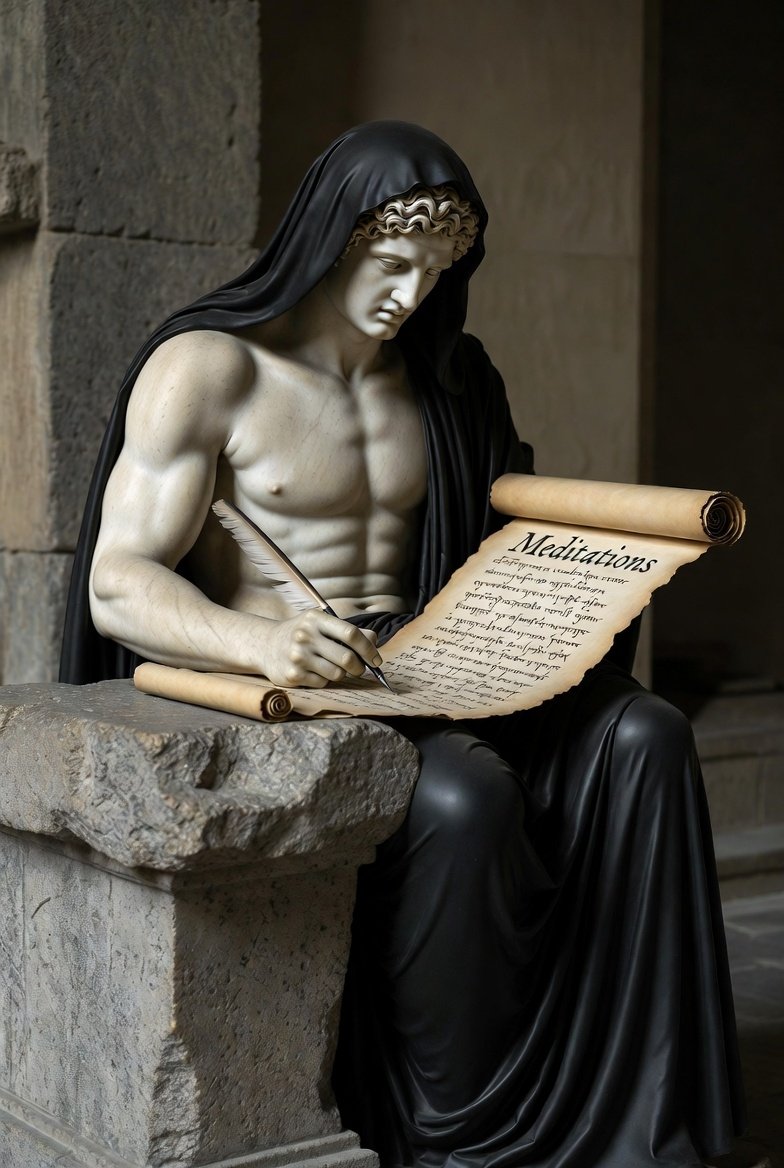
Sovereignty and Direction
The mind is the governing faculty of the Triune Self. It’s purpose is not endless analysis, intellectual accumulation, or constant stimulation, but command – the ability to choose direction, restrain impulse, and act deliberately rather than react instinctively. A disciplined mind gives structure to effort and coherence to intention. Without it, strength disperses and meaning collapses into noise.
Few texts articulate this inner sovereignty as clearly as Meditations. Written not as philosophy for others but as discipline for the self, Meditations returns again and again to a central truth: while external circumstances remain largely uncontrollable, one’s judgements, attention, and responses do not. For Marcus Aurelius, strength begins with mastery of assent – choosing how the mind meets the world. Clarity, restraint, and responsibility are not ideals; they are daily practices.
This principle is reinforced through action in The Art of War, where victory is determined before conflict through preparation, foresight, and command. A general who cannot govern himself cannot govern an army. Likewise, The Way of the Superior Man warns that without a clear inner direction, a man will be ruled by desire, distraction, and the expectations of others. Across all three traditions – Stoic, strategic, and initiatory – the message is consistent: without order in the mind, no strength or spirituality can endure.
“You have the power over your mind – not outside events. Realize this, and you will find strength.”
“The general who wins a battle makes many calculations in his temple before the battle is fought.”
“If you do not live according to your deepest truth, you will be controlled by what you avoid.”

Practice + Integration
To train the mind is not to think more, but to govern attention and intention.
- Begin each day in silence before consuming information
- Write one clear, non-negotiable action that aligns the day
- Practice restraint by delaying impulse rather than obeying it
- Return attention repeatedly to what is chosen, not what is loud
The mind does not demand perfection. It demands sovereignty.
The mind gives direction – but direction alone is not enough. Without the body, thought never proves itself. Without the spirit, clarity loses meaning.
The Triune Self is restored not by dominance of one faculty, but by their alignment.