BODY
The Body
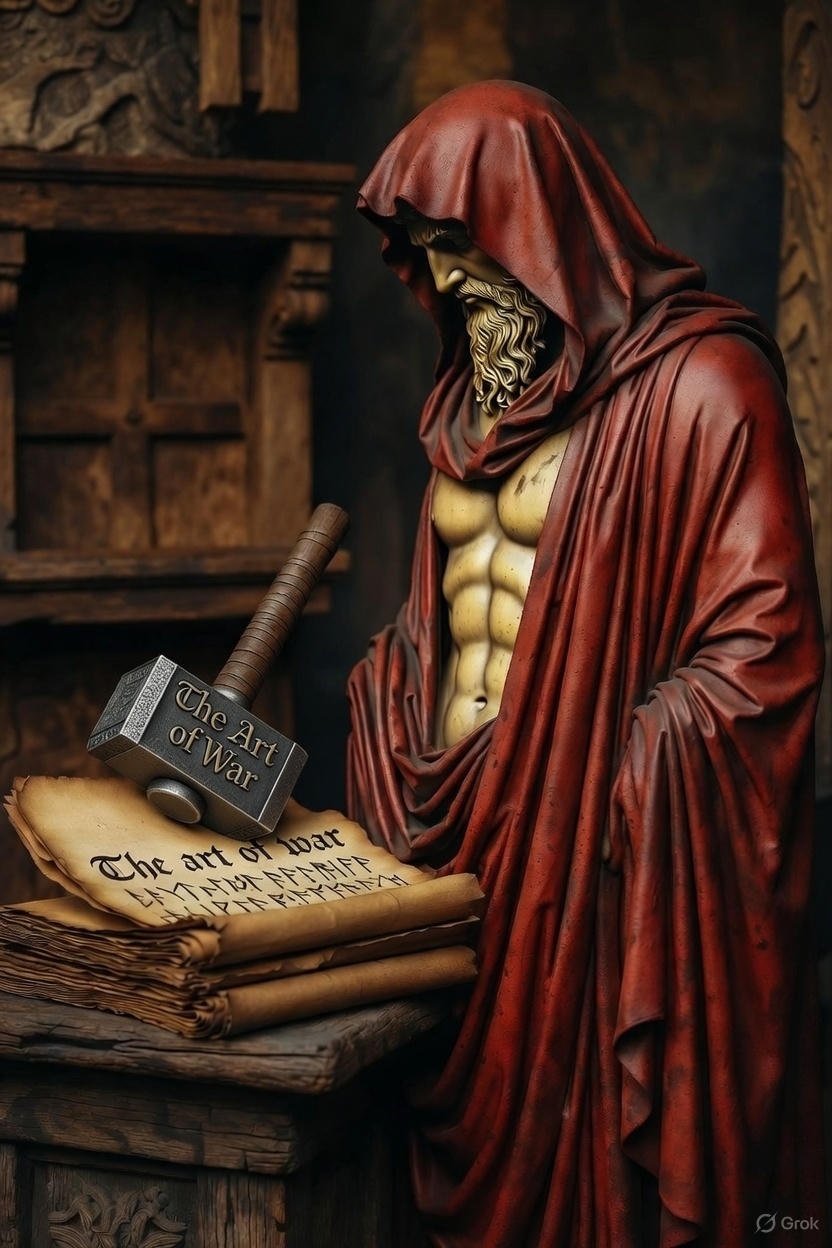
Embodiment and Proof
The body is the testing ground of the Triune Self. It is where intention encounters resistance and where belief either proves itself or collapses. The body does not negotiate with ideas – it responds only to action, effort, and repetition. A trained body transforms direction into reality, allowing thought to take form and meaning to remain grounded. Without embodiment, discipline remains theoretical and purpose dissolves under pressure.
Among texts that most clearly illuminate the role of embodiment is The Art of War. Though written as a treatise on conflict, its principles apply directly to physical training and preparedness. Victory, Sun Tzu insists, is determined before battle – through conditioning, positioning, and readiness. Strength is not forged in moments of crisis, but cultivated long before necessity arises. The body that is trained in advance does not panic when called upon, it responds.
This logic is echoed inwardly in Meditations, where endurance, restraint, and acceptance of hardship are treated as disciplines of character rather than punishment. The body becomes a partner in virtue, not an obstacle to comfort. Likewise, The Way of the Superior Man frames physical presence and capacity as prerequisites for purpose – without a body capable of bearing effort, even the clearest mission fails to manifest. Across all three traditions, the conclusion is consistent: strength is not cosmetic. It is functional, deliberate, and earned.
“Victorious warriors win first and then go to war, while defeated warriors go to war first and then seek to win.”
“The impediment to action advances action. What stands in the way becomes the way.”
“A man’s life is always structured by his capacity to withstand challenge.”

Practice + Integration
To train the body is to choose voluntary effort before forced necessity.
- Train strength and movement regularly, not for appearance but for capacity
- Seek resistance: load, tension, fatigue, and discomfort applied deliberately
- Maintain the body so it may serve direction rather than limit it
- Prefer consistency over intensity; readiness over display
Training need not be elaborate – only intentional, resisted, and repeatable.
The body gives proof – but it does not choose direction. That role belongs to the mind. And without the spirit, effort loses meaning.
Strength endures only when it serves something whole.