Introduction
Modern life does not suffer from a lack of information, opportunity, or advice. It suffers from fragmentation. The mind is overstimulated and reactive, the body is undertrained and neglected, and the spirit is either ignored or diluted into vague sentiment. We optimize pieces of ourselves while the whole quietly deteriorates. The result is not weakness, but disintegration—a self pulled in opposing directions, incapable of sustained clarity, strength, or meaning.
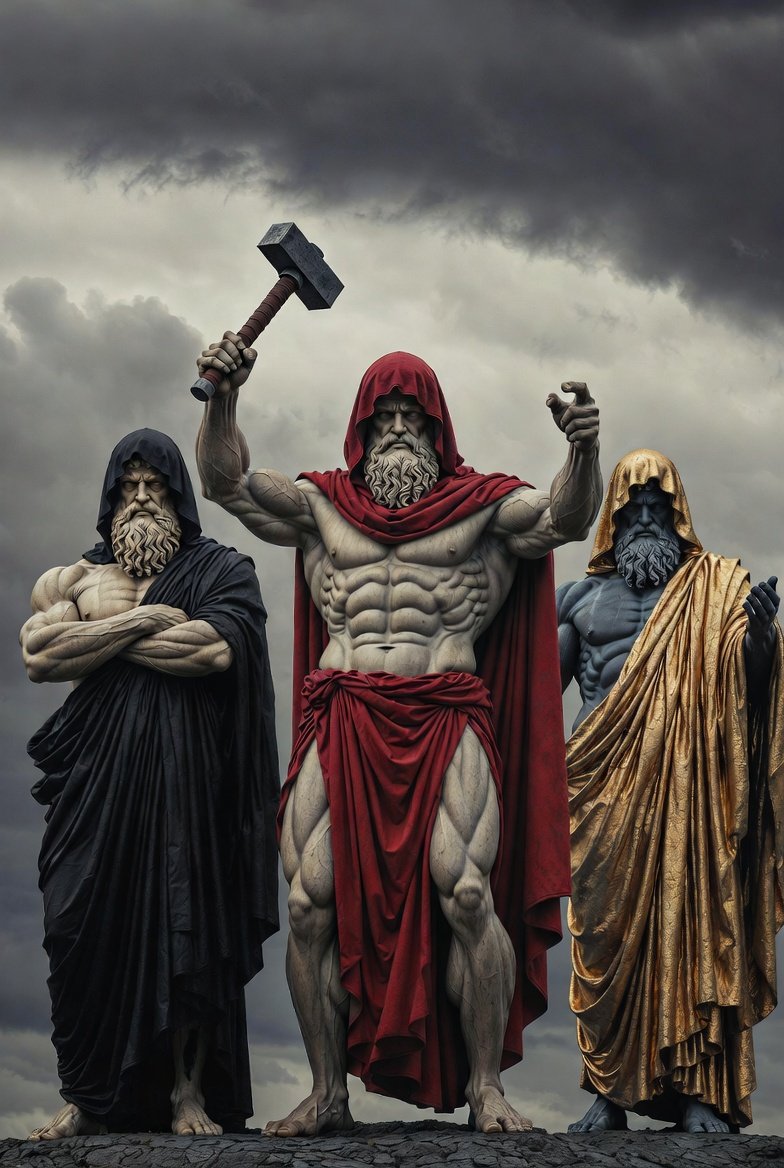
Across history, serious thinkers did not approach the human problem this way. They did not separate thought from action, or strength from purpose. They trained the human being as a whole, addressing different faculties with different disciplines. Three works, separated by centuries and cultures, stand out for the precision with which they address this problem: Meditations, The Art of War, and The Way of the Superior Man. These texts are not interchangeable, nor are they competing philosophies. Each governs a distinct domain of human life—and each becomes incomplete when practiced in isolation.
Meditations is a discipline of the mind. It trains inner sovereignty: the ability to govern attention, judgment, and response regardless of circumstance. The Art of War is a discipline of the body. It concerns preparation, readiness, and embodied capacity—the reality that victory or failure is determined long before action is forced. The Way of the Superior Man is a discipline of the spirit. It confronts the question of orientation: what one serves, why one endures, and how meaning is preserved under pressure.
Read together, these works form a functional architecture. The mind gives direction. The body bears the cost. The spirit holds the meaning. Remove any one, and the system collapses. Clarity without capacity becomes abstraction. Strength without purpose becomes hollow. Meaning without discipline becomes fantasy. Integration is not optional—it is the condition for a life that endures.
What follows is not a book review, nor a summary of ideas to admire from a distance. It is an examination of how these three disciplines operate in cooperation, and how they can be lived as a unified practice. The goal is not mastery of theory, but coherence of the self—the restoration of a human being capable of choosing clearly, acting decisively, and enduring meaningfully.
From that integration emerges a way of life.
1. The Discipline of the Mind
At its core, Meditations is not a work of philosophy meant to persuade others. It is a private manual of mental discipline, written by a man carrying immense responsibility under constant pressure. Marcus Aurelius does not ask how to feel better about life; he asks how to remain sovereign within it. The central Stoic insight is simple and uncompromising: while external events remain largely outside our control, our judgments, attention, and responses do not. The quality of a life, therefore, is determined not by circumstance, but by command of the mind.
This discipline begins with assent—the moment where the mind chooses how to interpret what it encounters. Marcus repeatedly returns to the same training ground: separating what happens from the meaning we assign to it. Insult, pain, loss, and delay are not denied; they are stripped of unnecessary narrative. In this way, the mind is trained to see clearly rather than react reflexively. Strength, for the Stoic, is not emotional suppression but clarity under pressure.
Yet Meditations is often misunderstood when read in isolation. Taken alone, Stoicism can harden into detachment or retreat into inwardness. Clarity without embodiment risks becoming sterile. This is where integration becomes necessary. Marcus himself understood this implicitly: the disciplined mind exists to prepare for action, not replace it. Thought is not an end state, but a governor—meant to direct effort when effort is required.
Here, the connection to The Art of War becomes evident. Just as a general must assess terrain, timing, and readiness before engaging, the mind must establish order before the body is called upon to act. Strategy begins internally. A scattered or reactive mind cannot sustain disciplined training, nor can it endure hardship without resentment. Inner sovereignty is the prerequisite for embodied readiness.
At the same time, Stoic clarity alone cannot answer the question of why one endures. Mental discipline can restrain impulse and govern reaction, but it does not automatically provide meaning. Without orientation, restraint becomes endurance for its own sake. This is where the work of The Way of the Superior Man completes the picture. Deida insists that clarity must serve devotion—that discipline must be oriented toward something greater than comfort, status, or approval. Otherwise, even the most controlled mind eventually collapses into nihilism or apathy.
Read in cooperation, these texts reveal the true role of the mind within an integrated life. The mind does not exist to dominate the self, but to govern it. It chooses direction, restrains distraction, and prepares the ground for action. It clears the noise so the body can act decisively and the spirit can remain anchored in meaning. Without this discipline, strength scatters and purpose dissolves.
The disciplined mind is not calm because life is easy.
It is calm because it is ordered.
2. The Discipline of the Body
The Art of War is often misread as a manual of aggression. In truth, it is a treatise on preparation, capacity, and embodied discipline. Its central claim is not that conflict is inevitable, but that when action is required, it is already too late to begin training. Victory and failure are decided long before engagement—through conditioning, positioning, and readiness. This principle applies as much to the human body as it does to armies.
Sun Tzu’s discipline is physical before it is tactical. An army that is exhausted, poorly supplied, or undisciplined collapses regardless of intent or morale. The same is true of the individual. Without a body capable of bearing effort, even the clearest intentions fail to materialize. The body is the executor of the mind’s direction; when it is neglected, thought remains abstract and fragile. Readiness is not aesthetic. It is functional.
This emphasis on preparation reveals the body’s true role within an integrated life. The body exists to absorb strain, to endure repetition, and to respond decisively when required. Strength is not forged in moments of crisis, but accumulated quietly through disciplined practice. The trained body does not panic under pressure—it performs. This is the physical corollary to Stoic mental sovereignty: just as the mind must govern reaction, the body must be conditioned to act without hesitation.
Here, the alignment with Meditations becomes clear. Marcus repeatedly frames hardship as material for virtue rather than an obstacle to comfort. Physical discomfort, fatigue, and limitation are not enemies to be avoided, but realities to be integrated. The body, like the mind, is trained through voluntary exposure to difficulty. Endurance is not punishment; it is preparation.
Yet embodiment alone is not enough. Strength without orientation eventually collapses into excess or waste. A body can be powerful and still be misdirected. This is where The Way of the Superior Man provides necessary completion. Deida insists that effort must be anchored in purpose—that physical capacity must serve something beyond ego, display, or domination. Without spirit, the body becomes restless, always seeking the next challenge without knowing why.
Taken together, these traditions restore the body to its rightful place. It is not an ornament to be admired, nor a machine to be exploited, but a vessel of readiness—maintained so that direction can become action and meaning can remain grounded. The disciplined body does not seek conflict, but it is never unprepared for it.
Strength is not built for comfort.
It is built for the moment when choice disappears and readiness is all that remains.
3. The Discipline of the Spirit
The Way of the Superior Man is often misunderstood as a book about relationships, polarity, or masculine identity. At its core, it is something far more demanding: a discipline of orientation. Deida confronts the question that mental clarity and physical strength cannot answer on their own—what is all this effort for? The spirit is not concerned with comfort, approval, or optimization, but with devotion to what one perceives as most true. Without this alignment, even the most disciplined life eventually collapses into resentment or drift.
Deida insists that a man must live in service to a purpose greater than his immediate desires. This is not a call to abandon pleasure or relationship, but to subordinate them to meaning. When spirit is neglected, effort becomes transactional and discipline becomes brittle. Strength may still be present, but it becomes restless—always seeking validation, escalation, or distraction. The spirit restores depth to action by anchoring it in something that endures beyond outcome.
This orientation completes what Stoic mental sovereignty alone cannot provide. Meditations trains restraint, clarity, and acceptance, but it intentionally avoids metaphysical speculation. It teaches how to endure, not why. Marcus’ reverence for nature, mortality, and duty gestures toward meaning, but does not fully articulate devotion. Deida fills this gap by insisting that endurance without orientation eventually hollows out the self. Discipline must serve something beyond control.
Likewise, The Art of War recognizes spirit as decisive, even in conflict. Armies do not fail from lack of weapons, but from loss of unity, morale, and shared purpose. Preparation and strategy collapse when cohesion dissolves. In the individual, the same principle holds: without spirit, strength fractures. Alignment is not mystical—it is functional. It keeps effort coherent under pressure.
Read together, these works restore the spirit to its proper role. The spirit does not replace the mind’s clarity or the body’s strength. It binds them. It ensures that direction is worth following and effort is worth sustaining. The spirit does not remove suffering; it grants the capacity to carry it without collapse.
A disciplined spirit does not seek escape.
It commits—to truth, to purpose, and to the work of becoming whole.
4. Integration and the Rule of Life
Taken together, Meditations, The Art of War, and The Way of the Superior Man do not offer competing philosophies, but a single architecture viewed from three angles. Each addresses a distinct faculty of the human being, and each reveals its limits when practiced alone. Clarity without capacity becomes abstraction. Strength without meaning becomes hollow. Purpose without discipline becomes fantasy. The failure is not in the texts, but in fragmentation.
What emerges from their integration is the Triune Self: a human being governed by a disciplined mind, supported by a trained body, and oriented by an aligned spirit. In this state, thought gives direction, effort gives proof, and meaning gives endurance. Life is no longer lived in opposition between desire and restraint, ambition and exhaustion, or strength and sensitivity. It moves as a single force.
This integration does not occur through insight alone. Understanding without structure fades. Inspiration without repetition collapses. What is required is a Rule of Life—a lived framework that translates philosophy into daily practice. Not a rigid doctrine, but a governing rhythm. Not a declaration of mastery, but a structure strong enough to support return when discipline falters.
A Rule of Life exists to preserve coherence under pressure. It ensures that the mind continues to lead rather than react, that the body remains capable rather than neglected, and that the spirit stays anchored in meaning rather than drift. It does not promise comfort or certainty. It offers alignment.
The work, then, is not to perfect oneself, but to integrate. To choose clarity over noise. Readiness over ease. Meaning over distraction. Again and again. This is how the Integrated Man is forged—not once, but daily.
Integration is not comfort.
It is coherence.
And coherence is a practice.
Conclusion: Putting It in Practice
Understanding the Triune Self is not the same as living it. Insight may clarify the problem, but it does not resolve it. Change occurs only when thought, action, and meaning are trained together—repeatedly, imperfectly, and under pressure. Integration is not achieved through belief, but through practice.
To live as a Triune Self is to give each domain its proper role. The mind governs direction. The body bears the cost. The spirit provides meaning. When these functions are confused or neglected, life fragments. When they are trained together, coherence emerges.
What follows is not a program, ideology, or personality type. It is a template—a way to begin practicing integration immediately.
1. Begin with Direction (Mind)
Each day must have a governing intention. Without direction, effort scatters and meaning dissolves into reaction.
Begin simply:
- Start the day in silence before consuming information
- Write one sentence that names what must be done regardless of mood
- Practice restraint: delay impulse instead of obeying it
This trains sovereignty. The goal is not constant calm, but clarity under pressure.
2. Translate Intention into Effort (Body)
Direction must be embodied, or it remains theoretical. The body is trained not for appearance, but for readiness.
Begin simply:
- Move the body daily with resistance or effort
- Choose practices that strain slightly but consistently
- Favor repetition over intensity; preparedness over display
The body learns through exposure. Voluntary effort today prevents forced collapse tomorrow.
3. Anchor Effort in Meaning (Spirit)
Effort without meaning becomes brittle. Discipline without orientation eventually collapses into resentment or drift.
Begin simply:
- Practice stillness daily, even briefly
- Attend to breath as a bridge between effort and awareness
- Ask regularly: What is this effort in service of?
The spirit does not remove difficulty. It allows difficulty to refine rather than corrode.
4. Practice Integration, Not Balance
These domains are not equal projects to be optimized separately. They function in relationship.
- The mind chooses direction
- The body proves commitment
- The spirit sustains endurance
When one is emphasized at the expense of the others, the self fragments. When all three are trained together—even imperfectly—coherence emerges.
5. Return Is the Discipline
Failure is inevitable. Drift is normal. Collapse happens.
What matters is not consistency without interruption, but return without excuse.
This is why a Rule of Life exists—not to demand perfection, but to provide a structure strong enough to come back to. Integration is maintained, not achieved. It is practiced daily, reinforced weekly, and recommitted to repeatedly.
A Final Word
You do not need to master philosophy, warfare, or spirituality to begin this work. You need only the willingness to govern your attention, train your body, and orient your life toward meaning—at the same time.
This is how the Triune Self is built.
This is how coherence replaces chaos.
Not all at once.
But deliberately.
And daily.